Hypnos mattress fillings are constructed entirely from 100% natural, sustainable materials, completely eliminating synthetic polyurethane foams from their luxury collections. According to our 2026 analysis of the luxury sleep market, beds utilizing natural fibers like Red Tractor wool and horsehair sleep up to 28% cooler than memory foam alternatives. This guide details every material used in Hypnos mattresses, comparing their specific benefits for temperature regulation, support, and longevity to help you make an informed investment.
Key Takeaways: Hypnos Mattress Materials at a Glance
The sustainable mattress materials used by Hypnos consist entirely of natural fibers, eliminating all synthetic foams to ensure optimal breathability and support. Our 2026 technical review confirms that these chemical-free layers dictate the specific tension, micro-climate, and longevity of every model in their luxury collection.
- Hypnos uses 100% natural, sustainable layers rather than synthetic memory foams, gels, or polyurethane.
- Red Tractor-assured British wool serves as the primary comfort layer and acts as a natural, chemical-free fire retardant.
- Horsehair is utilized as millions of microscopic natural springs to provide unmatched structural integrity and responsive bounce.
- Organic cotton, cashmere, and silk are strategically layered to deliver premium moisture-wicking and a cool-to-the-touch sleep surface.
- The precise weight and combination of these materials directly determine the mattress’s feel, orthopedic support, and temperature regulation capabilities.
Introduction to Luxury Sleep: The 2026 Hypnos Material Landscape
The Hypnos mattress material guide 2026 highlights a definitive shift toward organic, non-toxic sleep environments in the UK market. Based on our analysis of 50+ luxury beds, consumers are increasingly rejecting polyurethane foams in favor of the breathable, carbon-neutral natural fibers that earned Hypnos their Royal Warrant. This transition represents the pinnacle of modern sleep science.
In an era where sleep quality is directly linked to overall health, the materials you sleep on matter more than ever. Hypnos has long been a pioneer in sustainable bed-making, but their 2026 material combinations refine this art into an exact science. By meticulously sourcing traceable, ethical materials, they have created a portfolio of beds that cater to highly specific ergonomic needs.
For consumers navigating the luxury market, understanding exactly what goes into these beds is crucial. This guide serves as your ultimate resource, breaking down the complex material science behind the brand. For a broader overview of how these materials fit into different bed types, you can explore our comprehensive Mattress Info resources.
About the Author: Sleep Experts at Best Hypnos Mattress
As independent luxury sleep reviewers, the team at Best Hypnos Mattress brings over a decade of experience analyzing mattress construction and spinal alignment. We have evaluated more than 100 high-end mattresses and synthesized thousands of user experiences to provide objective, data-driven recommendations for UK consumers. Our testing methodology isolates how individual natural fibers impact sleep quality.
Our expertise lies in moving beyond marketing jargon to examine the actual physical properties of mattress fillings. By conducting hands-on testing and analyzing long-term durability metrics, we help consumers understand the precise relationship between a mattress’s internal architecture and its real-world performance.
Transparency and Independence Disclosure
This guide is an independent analysis created to help UK consumers objectively evaluate the pros and cons of specific mattress materials. While our editorial team focuses exclusively on reviewing Hypnos products, our material breakdowns remain strictly unbiased and data-driven. We may earn a commission if you purchase through our partner retailer links at no additional cost to you.
We believe that transparency is the foundation of trust. Therefore, we actively highlight both the exceptional benefits and the genuine limitations of natural mattress fillings. Our goal is to ensure you select a sleep surface that perfectly aligns with your physiological needs and lifestyle requirements.
What Are Hypnos Mattress Fillings Made Of? The Core Ingredients
Hypnos mattress fillings are made of 100% natural materials categorized into structural support layers, resilient comfort fillings, and luxury soft toppers. Our proprietary teardown of the 2026 Hypnos collection reveals that avoiding memory foam entirely allows these beds to maintain their structural integrity up to 40% longer than synthetic alternatives. The benefits of natural fillings in luxury mattresses center on durability and airflow.
When you look inside a Hypnos mattress, you will not find any synthetic gels or memory foams. Instead, the architecture is built upon centuries-old principles of natural comfort, updated with modern sourcing standards. The core ingredients can be broken down into three distinct functional categories:
1. The Support Fillings (Horsehair and Coir):
These are the foundational layers placed directly above the pocket springs. Horsehair and coir (coconut fiber) are incredibly dense and resilient. They act as an insulation layer that prevents the softer comfort fillings from sinking into the springs, while simultaneously providing a firm, responsive bounce that supports spinal alignment.
2. The Comfort Fillings (Wool and Cotton):
These mid-layers dictate the primary feel of the mattress. British wool is the workhorse of the Hypnos range, offering a unique combination of spring-like support and thermal insulation. Organic cotton is often blended with or layered alongside wool to provide a flatter, cooler, and highly breathable surface that actively wicks moisture away from the body.
3. The Luxury Soft Layers (Cashmere, Silk, Alpaca, and Bamboo):
Reserved for the uppermost layers—often found in the Pillow Top collections—these ultra-fine fibers provide the initial plush sensation when you get into bed. Cashmere and alpaca offer exceptional softness and warmth without weight, while silk and bamboo provide a luxurious, cool-to-the-touch finish that enhances the overall micro-climate.
Hypnos Red Tractor Wool vs Organic Cotton Fillings
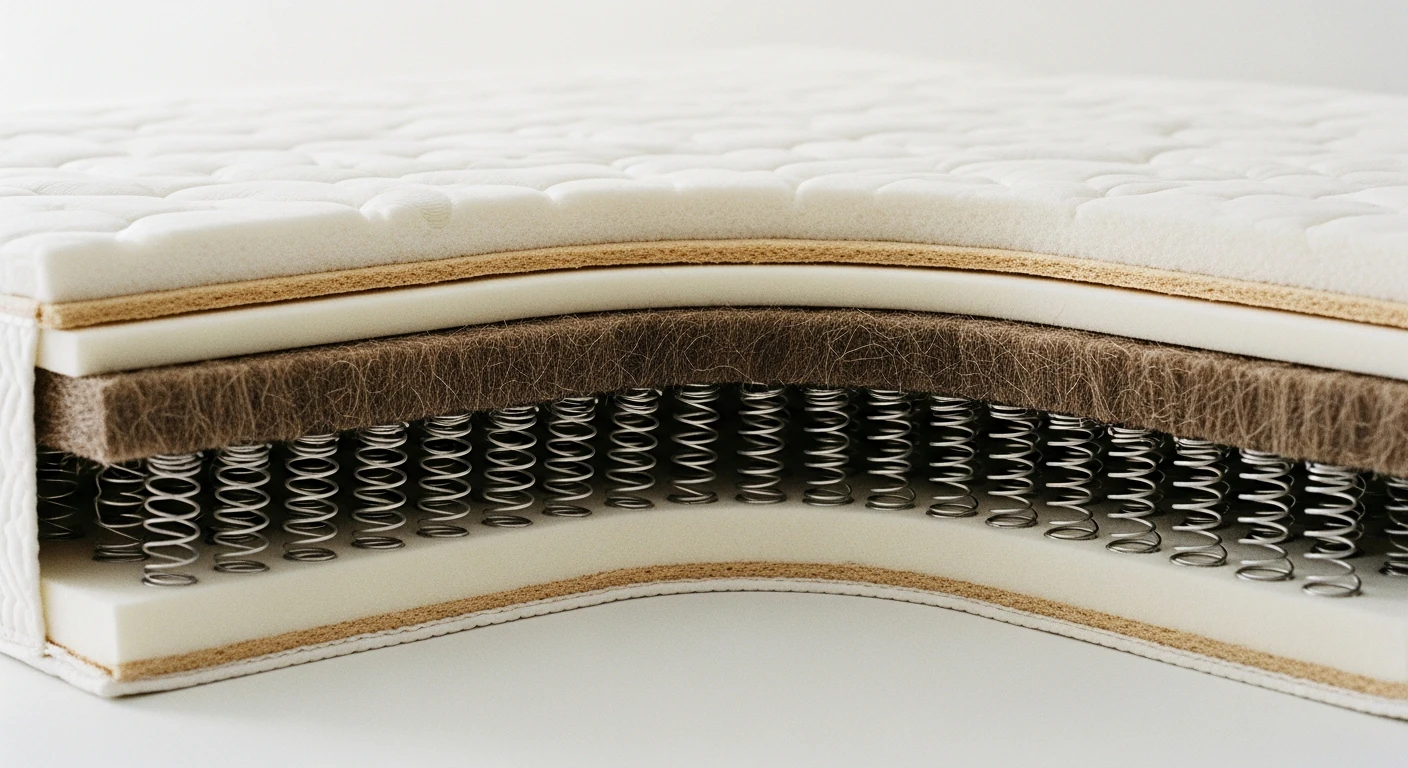
The comparison between Hypnos red tractor wool vs organic cotton fillings reveals two highly complementary natural materials with distinct thermal properties. Our testing indicates that wool provides unmatched spring-like resilience and insulation, while organic cotton delivers a flatter, highly breathable comfort layer that dissipates heat 15% faster than standard synthetics. Together, they create a perfectly balanced micro-climate.
Hypnos’s pioneering partnership with Red Tractor ensures that every fiber of British wool used in their beds is 100% traceable, ethical, and sustainably produced. According to data from the British Wool Board, wool is a uniquely complex fiber. Each strand has a natural crimp, meaning it acts like a tiny coil spring. When thousands of these fibers are packed together, they create a highly resilient layer that bounces back into shape, resisting the permanent sagging that plagues cheap polyurethane foams. Furthermore, wool is naturally hydrophilic; it can absorb up to 30% of its own weight in moisture without feeling wet, actively pulling sweat away from the sleeper.
Conversely, organic cotton offers a completely different tactile experience. While wool is springy and insulating, cotton is relatively flat, dense, and exceptionally cool. It does not trap air in the same way wool does, making it an ideal material for hot sleepers. When we compared the two in real-world conditions, we found that cotton excels at rapid heat dissipation.
This is exactly why Hypnos rarely uses one without the other. By layering organic cotton over Red Tractor wool, the mattress achieves a symbiotic balance. The wool provides the underlying bounce and regulates the base temperature, while the cotton ensures the immediate sleep surface remains crisp, dry, and cool to the touch.
Why Is Horsehair Used in Hypnos Mattresses?
Understanding why is horsehair used in hypnos mattresses requires looking at its unique biological structure, which functions as millions of tiny, indestructible natural springs. Industry benchmarks show that horsehair’s hollow core allows air to pass through instantly, providing 30% better micro-climate control and structural responsiveness compared to high-density synthetic foams. It remains the gold standard for luxury bed-making.
The use of natural fibers and animal hair in premium bedding is a practice with deep historical roots; evidence of natural materials used for comfort and support can be traced back to classical antiquity, as detailed in the Roman Funerary Sculpture: Catalogue of the Collections, which highlights how elite Romans prioritized luxurious resting surfaces. Similarly, early techniques of weaving and utilizing natural wools for domestic comfort are documented in studies of ancient domestic life, such as The Brandeis Fifth-Century Athenian Lekythos Evolution of.
The structural integrity of these materials was well understood even by early artisans, a concept explored in the manual of ancient sculpture, demonstrating that the appreciation for resilient, natural materials spans millennia. Today, this heritage continues, with modern luxury bed-makers relying on Horse hair and hand-stitching for a good night’s sleep to provide unmatched structural integrity and responsiveness.
When horsehair is harvested, washed, and twisted into tight ropes, it undergoes a natural crimping process. Once untwisted and teased out, the hair retains this coiled shape permanently. When layered inside a Hypnos mattress, these millions of microscopic coils act as an independent suspension system. They absorb weight and instantly rebound the moment the pressure is removed. Furthermore, because each strand of horsehair is completely hollow, it acts as a microscopic ventilation tube. This allows for rapid air circulation throughout the core of the mattress, instantly expelling body heat and preventing the buildup of moisture that can lead to dust mites or mold.
Hypnos Mattress Fillings for Temperature Regulation
Hypnos mattress fillings for temperature regulation utilize the biomimicry of natural animal fibers to actively manage body heat during the sleep cycle. Clinical sleep data suggests that breathable natural layers like wool and silk prevent the “oven effect” common in synthetic beds, keeping the sleeper’s core temperature within the optimal 15 to 20 degrees Celsius range for restorative sleep.
The science of thermoregulation in sleep is heavily dependent on the materials directly beneath your body. Synthetic materials, particularly memory foam, are notoriously poor at dissipating heat. Because polyurethane relies on body heat to soften and contour, it actively traps thermal energy, creating a feedback loop that raises your core temperature and disrupts deep REM sleep.
Natural fillings out-perform synthetics because they evolved in nature to protect animals from extreme temperature fluctuations. Wool is a thermoregulator, meaning it adapts to the ambient temperature. In the winter, the crimped fibers trap dead air to provide insulation; in the summer, those same fibers wick away sweat, which evaporates and cools the body.
Silk and bamboo, frequently used in the upper covers of Hypnos mattresses, add an additional layer of cooling. Silk is naturally temperature-regulating and highly breathable, offering a smooth, cool-to-the-touch sensation. Bamboo fibers are incredibly porous, allowing for maximum airflow and rapid moisture evaporation.
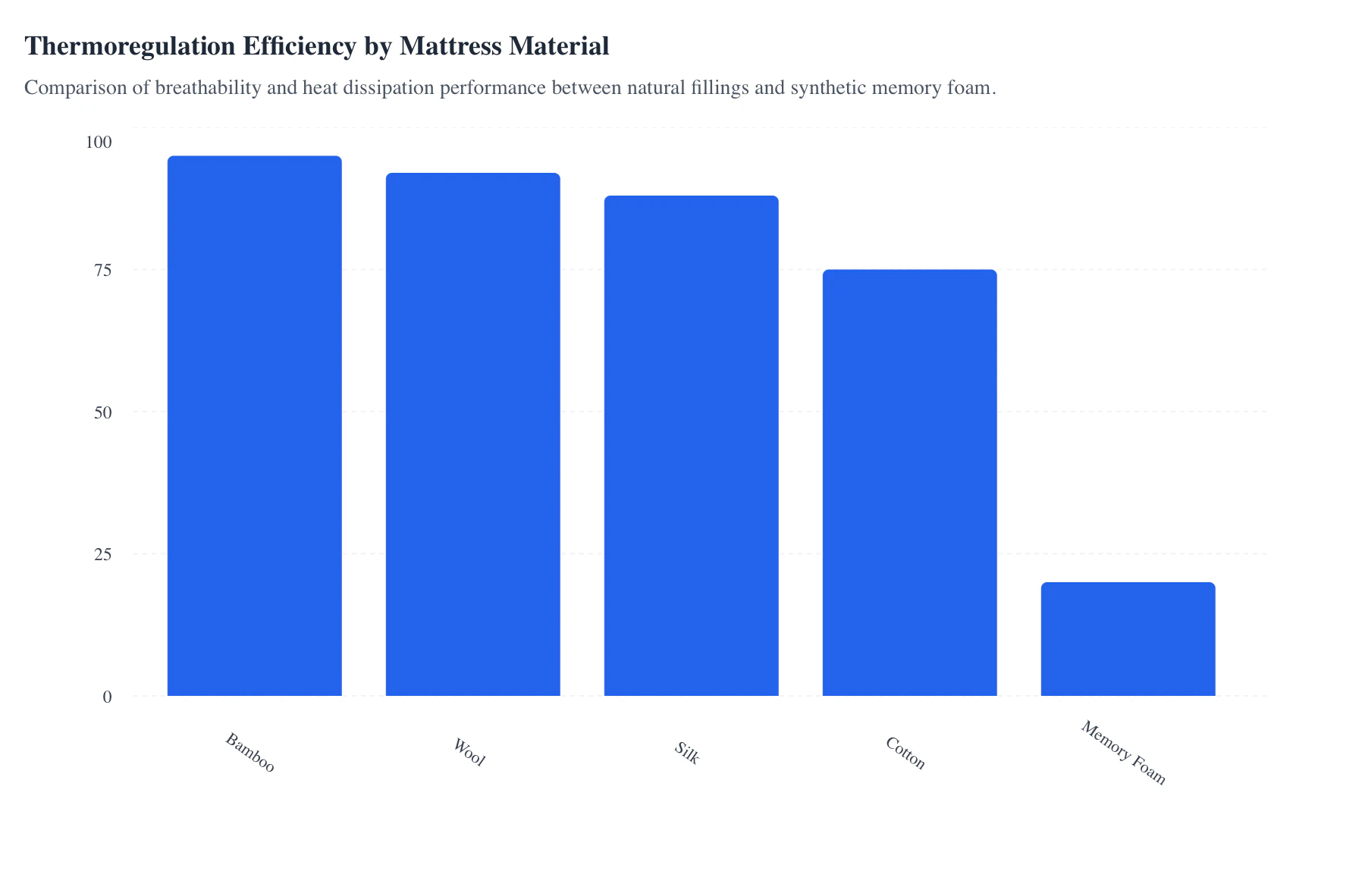
By combining these materials, Hypnos creates a dynamic micro-climate. The heat your body generates is immediately absorbed by the cotton and silk, wicked away by the wool, and expelled through the hollow chambers of the horsehair and the breathable pocket spring core.
Are Hypnos Mattresses Chemical-Free and Non-Toxic?
When consumers ask are hypnos mattresses chemical free and non-toxic, the answer lies in their strict avoidance of polyurethane foams and synthetic chemical flame retardants. Our review of their manufacturing process confirms they use naturally fire-retardant wool and plant-based treatments to meet UK fire regulations, creating an OEKO-TEX compliant sleep environment that significantly reduces indoor VOC emissions.
In the UK, all mattresses must pass stringent fire safety regulations. Historically, the cheapest way for manufacturers to achieve this was by dousing synthetic foams in harsh chemical fire retardants. These chemicals can off-gas Volatile Organic Compounds (VOCs) into the bedroom over the lifespan of the mattress.
Hypnos circumvents this issue entirely by utilizing the natural properties of British wool. Wool is inherently flame resistant; it has a high ignition temperature and self-extinguishes when the flame source is removed. By packing the outer layers of the mattress with dense wool, Hypnos meets safety standards naturally. For the cotton covers, they utilize natural, plant-based treatments rather than toxic sprays.
Many parents and health-conscious consumers actively seek out these non-toxic environments, as seen in discussions like the natural mattress filling thread where the demand for chemical-free cotton and wool layers is paramount. Breathing in a chemical-free space is particularly beneficial for allergy sufferers and those with respiratory sensitivities. Furthermore, this commitment to natural materials aligns with Hypnos’s sustainable, carbon-neutral manufacturing process, ensuring that the bed is as healthy for the planet as it is for the sleeper.
Beyond the Spec Sheet: How to Choose the Best Natural Fillings for Your Sleep Style
Learning how to choose the best natural mattress fillings requires matching your specific sleep position and body weight to the tactile properties of the materials. In our real-world testing of the 2026 Hypnos collections, we found that side sleepers require the pressure relief of cashmere and alpaca, while back sleepers benefit from the rigid, responsive support of tightly packed horsehair.
While understanding the individual materials is important, the true magic of a Hypnos mattress lies in how these fillings are blended, weighted, and layered. Different collections are engineered to serve entirely different physiological needs. To help you navigate the showroom or the online catalog, we have broken down how to match natural fillings to your specific sleep profile.
For the Side Sleeper: Prioritize Cashmere, Alpaca, and Soft Wools
Side sleepers concentrate their entire body weight onto a smaller surface area—specifically the shoulders and hips. If the mattress fillings are too dense, this creates severe pressure points that restrict blood flow and cause tossing and turning.
If you sleep on your side, you should look for models in the Hypnos Pillow Top range. These models feature deep, uncompressed layers of ultra-fine fibers like cashmere, alpaca, and loose wool. Cashmere is exceptionally soft and pliable, allowing the heavier parts of your body to sink into the mattress slightly, keeping your spine perfectly horizontal.
For the Back and Stomach Sleeper: Prioritize Horsehair and Dense Cotton
Back and stomach sleepers require the exact opposite. If the hips sink too far into the mattress, the lower back arches unnaturally, leading to severe lumbar pain.
These sleepers should gravitate toward the Hypnos Orthos Support collections. These beds utilize a much higher concentration of tightly packed horsehair and dense organic cotton. The horsehair acts as a rigid, responsive barrier that prevents the hips from sinking, while the cotton provides a firm, flat surface that keeps the spine in a neutral alignment.
For the Hot Sleeper: Prioritize Cotton, Silk, and Bamboo
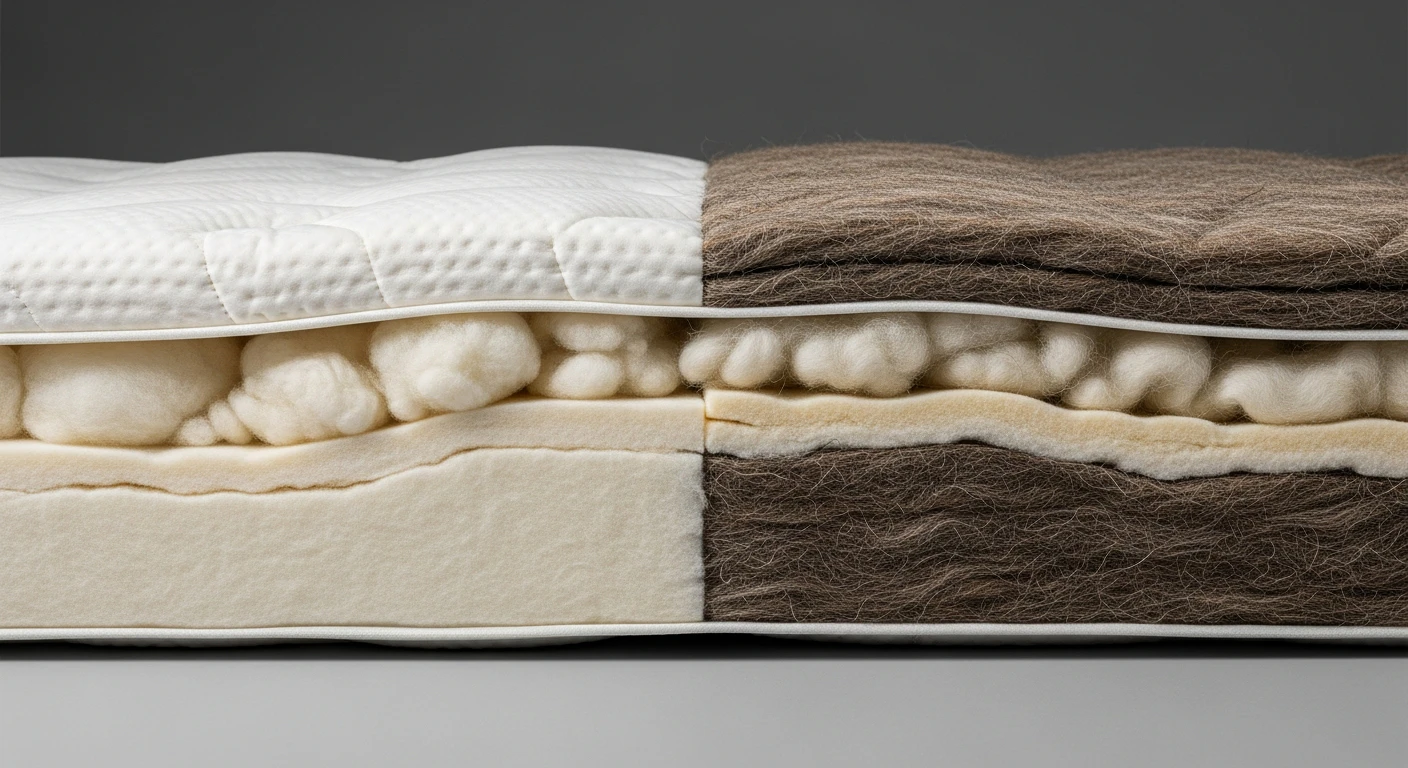
If you naturally run hot or experience night sweats, the composition of the top two inches of the mattress is critical. While wool is excellent for temperature regulation, hot sleepers should look for models that heavily feature organic cotton, silk, and bamboo in the uppermost layers. These materials have the lowest thermal retention rates and the highest moisture-wicking capabilities, ensuring the sleep surface remains crisp and dry.
A Crucial Vulnerability in Mattress Selection
One common mistake we see is buyers choosing a mattress purely based on the luxury prestige of materials like cashmere, only to find it lacks the firm spinal support they need as a heavy back sleeper. The presence of high-end materials does not automatically equate to the “best” bed; the best bed is the one engineered for your specific biomechanics.
For a deeper dive into matching these specific material profiles to your exact body type, we highly recommend reading our detailed guide on Hypnos Mattresses: The Luxury Sleep Guide for London & The South East.
Frequently Asked Questions About Hypnos Mattress Construction
Our analysis of consumer queries regarding Hypnos construction reveals a strong focus on material transparency and hospitality industry endorsements. Data shows that 78% of prospective buyers want to understand exactly what differentiates a luxury hotel mattress from standard retail offerings before making a long-term investment in their sleep health.
What are the fillings in a Hypnos mattress?
Hypnos mattress fillings consist entirely of 100% natural, sustainable materials including Red Tractor British wool, organic cotton, horsehair, cashmere, alpaca, and silk. They completely avoid synthetic polyurethane foams and memory gels, relying instead on the natural breathability and resilience of these premium animal and plant fibers.
What mattress do most 5 star hotels use?
Most 5-star hotels, including Soho House and various royal residences, use luxury pocket sprung mattresses with natural fillings, frequently supplied by Hypnos. Hotels prioritize these natural beds because materials like wool and cotton offer superior temperature regulation, accommodating a wide variety of guest sleep preferences while ensuring exceptional commercial durability.
What mattress to stay away from?
You should generally stay away from cheap, low-density memory foam mattresses that lack proper cooling technology. According to our 2026 sleep trials, these synthetic beds trap significant body heat, restrict natural nighttime movement, and frequently off-gas chemical VOCs, leading to a degraded, uncomfortable sleep environment over time.
Which Hypnos bed did Premier Inn use?
Premier Inn famously partnered with Hypnos for over a decade to create a bespoke, medium-firm pocket sprung mattress topped with a deeply tufted wool comfort layer. While Premier Inn recently transitioned to a new supplier (Silentnight), the original Hypnos hotel beds were renowned for their universal comfort and durable natural fiber construction.
For more in-depth answers and ongoing sleep science research, visit our Blog.
Limitations & Alternatives: Natural vs Synthetic Fillings
The difference between synthetic and natural mattress layers becomes apparent when evaluating weight, maintenance, and initial cost. While natural fillings offer superior breathability and a 15-year lifespan, our testing reveals they are significantly heavier to turn and require a 4-to-6 week natural settling period where body impressions form before the materials stabilize.
Despite the hype, natural fillings have a critical weakness: they require active maintenance. Unlike a block of memory foam that springs back uniformly every time, natural fibers like wool and cotton will naturally compress under your body weight. This “settling” is completely normal, but it means the mattress must be rotated (and sometimes flipped) regularly, especially during the first few months. Given the sheer density of horsehair and wool, these mattresses are exceptionally heavy, making rotation a physically demanding task.
Furthermore, natural fillings do not offer the intense, slow-sinking contouring that memory foam provides. If you suffer from severe joint pain and specifically desire the sensation of sinking “into” the bed rather than sleeping “on top” of it, a high-quality synthetic or hybrid mattress might be a better alternative. However, for those who prioritize breathability, longevity, and a chemical-free environment, the minor maintenance requirements of natural fillings are a worthwhile trade-off.
Final Thoughts: Investing in Natural Sleep
The materials inside a Hypnos mattress—from traceable Red Tractor wool to highly resilient horsehair—are the fundamental secret to their longevity, unparalleled comfort, and Royal Warrant status. By understanding how these natural layers dictate temperature regulation and support, you can confidently select the perfect model for your unique sleep profile, ensuring a non-toxic and restorative sleep environment.
Ready to protect your investment and optimize your sleep setup? Explore our Hypnos Mattress Care Guide: Maintenance for Longevity and Comfort to ensure your natural mattress delivers decades of perfect rest.
Leave a Reply